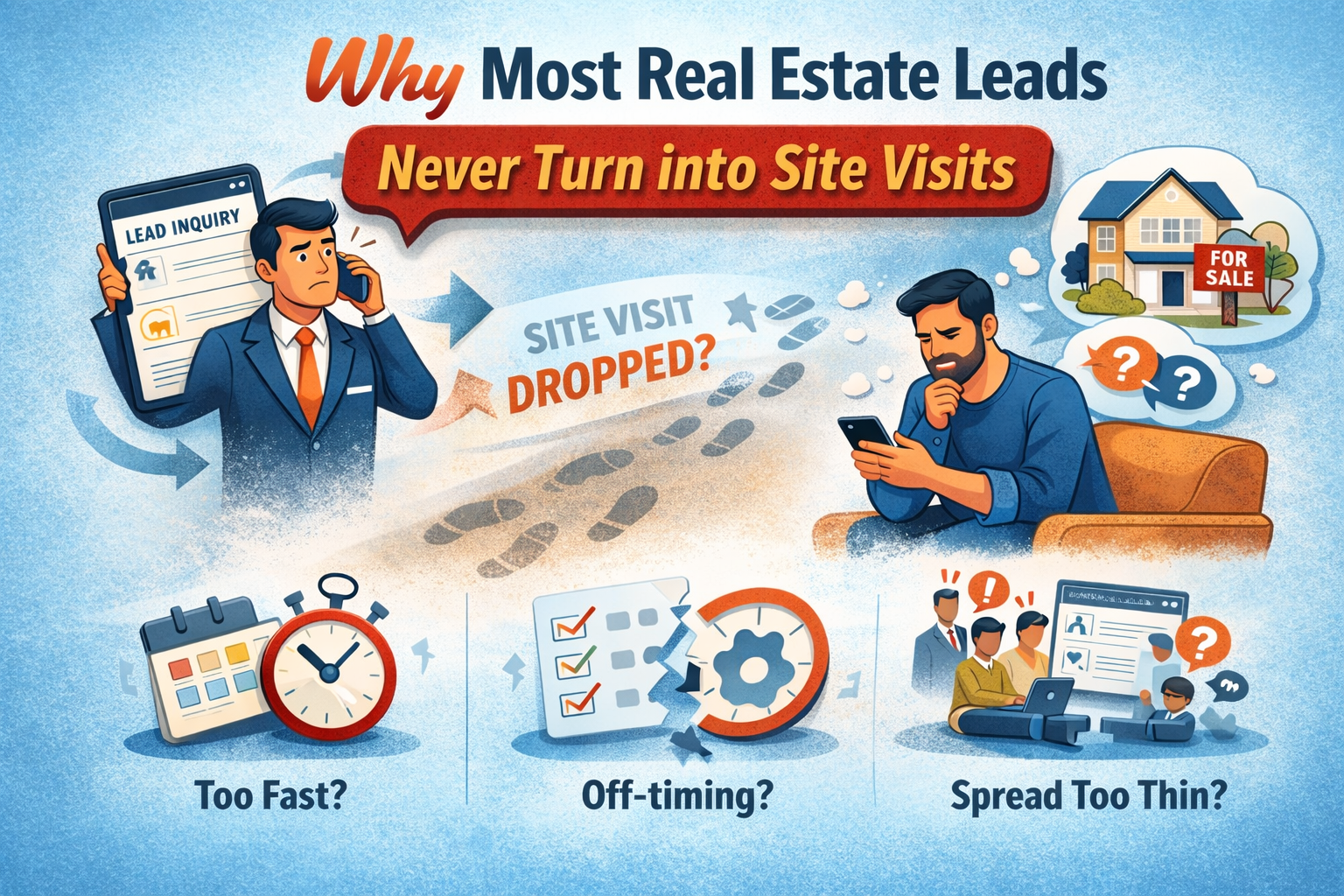
Why most real estate leads never turn into site visits
Lead numbers look healthy. Campaigns are running. Enquiries are coming in. Dashboards show activity. Yet when you look at site visits, the conversion feels disproportionately low. This gap between leads generated and visits completed is one of the most persistent frustrations in real estate. And when it doesn’t improve despite sustained marketing spend and follow-up effort, teams usually start questioning lead quality. But when you look closely at how leads actually move through the system, site visits don’t fail for the reasons most teams expect.
The assumption teams make when site visits stay low
When leads don’t convert into visits, the most common explanations are:
- the leads aren’t serious
- the audience quality is poor
- the market is slow
- buyers are just browsing
These explanations feel logical, especially when lead volume is high but outcomes aren’t. What’s often missed is that most leads don’t fail because of disinterest. They fail because momentum is lost before a visit is ever discussed meaningfully.
What usually happens between an incoming lead and a site visit
For most buyers, submitting an enquiry is not a commitment. It’s a starting point. After that first interaction, buyers typically:
- explore options independently
- compare pricing and locations
- discuss possibilities with family
- take time to evaluate trade-offs
This phase is where intent either builds or fades. The problem is that this entire period happens quietly. From the team’s perspective, very little seems to be happening - even though the buyer may still be actively considering. That’s where most site visits are lost.
Why leads drop off before a visit is booked
Site visit conversion usually breaks due to a few recurring patterns. Conversations move faster than decisions Sales processes often move quicker than buyer decisions. Teams aim to:
- qualify quickly
- push toward a visit
- close the loop
Buyers, meanwhile, are still forming clarity. When conversations move ahead of the buyer’s thinking, resistance doesn’t show up as a “no”. It shows up as silence.
Follow-ups focus on progression, not readiness
Many follow-ups are designed around next steps:
- confirming availability
- proposing visit dates
- checking interest
But buyers may not yet be ready for those steps. When follow-ups don’t align with readiness, they feel premature. Buyers disengage not because they aren’t interested — but because they’re not ready to act.
Attention is spread across too many leads
In high-volume systems, teams try to keep everyone warm. This often means:
- equal follow-up for unequal intent
- limited time spent on buyers closer to a decision
- missed opportunities with those who were quietly ready
When attention is spread evenly, momentum gets diluted. And diluted momentum rarely leads to site visits.
Why this gap is often misunderstood
From a reporting standpoint, everything looks active: - leads contacted - calls attempted - follow-ups sent But activity metrics don’t reveal buyer readiness. Without understanding where each buyer is in their decision process, teams assume low site visit conversion is a volume problem. In reality, it’s often a timing and prioritisation problem. That misunderstanding keeps teams optimising inputs - instead of outcomes.
What tends to improve site visit conversion
Teams that consistently convert more leads into visits don’t rely on pressure or persistence alone. They adjust how they interpret buyer behaviour. A few patterns tend to help:
- Momentum over speed - Moving forward when interest is building matters more than moving fast.
- Prioritisation over equal effort - Not every lead needs the same attention at the same time.
- Readiness over rules - Visits get booked when conversations align with where buyers actually are.
These shifts don’t require more leads. They require better alignment between effort and intent.
Quick answer: why most real estate leads never turn into site visits
Most real estate leads don’t turn into site visits because buyer momentum fades before readiness is recognised. When follow-ups push for visits without aligning to the buyer’s decision stage, conversations stall and interest quietly drops off.
FAQs about site visit conversion in real estate
Why do so many real estate leads fail to convert into site visits?
Because buyers need time to evaluate before committing to a visit. When teams push too early or miss the right moment, visits don’t materialise.
Is low site visit conversion always a lead quality issue?
Not always. In many cases, it’s a prioritisation and timing issue rather than a problem with lead source quality.
Does calling faster improve site visit conversion?
Speed helps initially, but relevance and timing matter more after the first interaction.
Should teams focus on fewer leads to improve visits?
Often yes. Focusing on leads that show readiness tends to improve conversion more than spreading effort thinly.
What’s the biggest mistake teams make with site visits?
Treating all leads as equally ready, instead of recognising differences in buyer intent.
Conclusion: site visits are lost before they’re ever discussed
Most site visits don’t fail at the scheduling stage. They fail earlier - when buyer readiness isn’t recognised and momentum quietly fades. Teams that understand this don’t push harder. They align better. And alignment is what turns interest into visits.
If you’re curious how some real estate teams identify when buyers are actually ready for a site visit — instead of guessing — you can explore how that approach works here