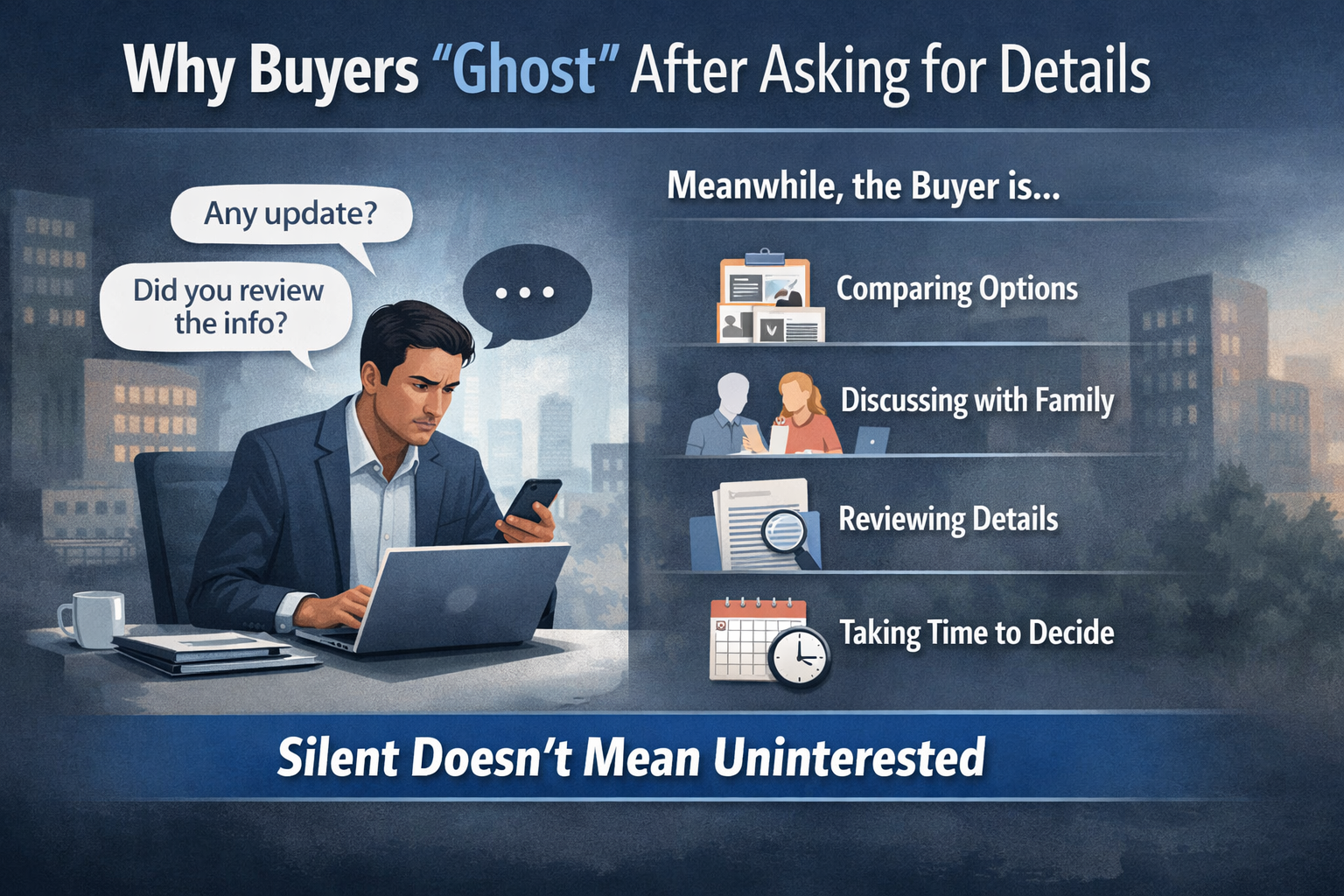
Why buyers ghost even after asking for details
A buyer reaches out. They ask for pricing, floor plans, or location details. They sound genuinely interested. You send everything they asked for. And then - nothing. No reply. No acknowledgment. No follow-up-call pickup. This is one of the most frustrating moments in real estate sales because it feels contradictory. If they asked for details, why would they disappear right after getting them? When this keeps happening, teams usually assume the buyer was never serious to begin with. But when you look closely at how these conversations unfold, a different pattern often shows up.
The assumption most teams make in this situation
When a buyer goes silent after asking for details, the natural reaction is:
“They were just browsing.”
That explanation feels logical. It helps close the loop emotionally. And it pushes the team to move on quickly to the next lead. But across many real estate sales conversations, silence after sending details often has less to do with casual interest — and more to do with what happens after information is shared.
What usually happens after details are sent
From the buyer’s side, asking for details doesn’t mean they’re ready to continue the conversation. It usually means they’re ready to think independently. After receiving information, buyers tend to:
- read through it in parts, not all at once
- compare it with 2 or 3 other options
- discuss it internally with family/friends
- revisit it when time permits
During this phase, replying to messages often feels unnecessary. The buyer isn’t disengaged — they’re processing. The challenge is that this entire phase happens quietly, without obvious signals back to the team.
Why buyers ghost in practice
Buyer silence after asking for details usually comes from a few recurring breakdowns.
Too much information, too little guidance
When buyers ask for details, teams often respond by sending:
- multiple PDF brochures
- long WhatsApp messages
- full price sheets
- everything all at once
While well-intentioned, this can unintentionally shift the burden of decision-making entirely onto the buyer. Without clarity on what to look at first or what matters most, buyers pause. And pausing often turns into silence.
Follow-ups don’t reflect where the buyer is
After details are shared, follow-ups often look like:
- “Did you get a chance to review details?”
- “Any update?”
- “Let me know your thoughts.”
These messages assume the buyer is ready to respond. In reality, the buyer may still be trying to understand pricing, layouts, or trade-offs. When follow-ups don’t align with that internal process, they feel premature — and are easy to ignore.
The conversation loses momentum quietly
There is usually a short window right after details are shared when curiosity is high. If that moment passes without meaningful engagement, restarting the conversation later becomes harder. Not because interest vanished — but because context faded. At that point, even interested buyers feel less urgency to respond.
Why this is often misunderstood
From the team’s perspective, everything was done correctly:
- the buyer asked
- the information was sent
- follow-ups were attempted
What’s missing is visibility into how the buyer engaged after receiving the details. Without that visibility, silence is interpreted as rejection. But in many cases, it’s simply unobserved consideration. This gap leads teams to move on too early — or to push at the wrong time.
What tends to reduce ghosting after sharing details
Teams that see fewer drop-offs don’t necessarily send less information. They change how they think about the moment details are shared. A few patterns tend to help:
- Structure over volume - Buyers respond better when information is guided, not dumped.
- Relevance over reminders - Follow-ups work when they reflect what the buyer is likely evaluating.
- Timing over persistence - Re-engagement works best when it aligns with renewed interest, not arbitrary schedules.
These shifts don’t require harder selling. They require better alignment with the buyer’s decision rhythm.
FAQs about buyers ghosting after enquiries
Why do buyers ghost after asking for property details?
Because asking for details often marks the start of private evaluation. Buyers may pause communication while they compare options or discuss internally.
Does ghosting mean the buyer isn’t serious?
Not necessarily. In many cases, buyers are still interested but aren’t ready to respond without clarity.
How soon should you follow up after sending details?
There’s no fixed timeline. The right moment depends on buyer engagement, not elapsed time.
Is sending more information the right way to revive interest?
Usually not. Sending more information without structure often increases overwhelm and prolongs silence.
Why do follow-ups fail after sharing details?
Because they’re often disconnected from what the buyer is actually evaluating at that stage.
Conclusion: ghosting is often a pause, not a rejection
When buyers ask for details and then go silent, it’s tempting to label them as time-wasters. But in many cases, silence simply means the buyer has shifted into thinking mode — without a clear reason to respond yet. Teams that treat this pause as rejection lose opportunities. Teams that understand it as a phase of consideration stay aligned with the buyer’s journey. And alignment is what keeps conversations alive.
If you’re curious how some real estate teams understand buyer engagement after sharing details — instead of guessing — you can explore how that approach works here.